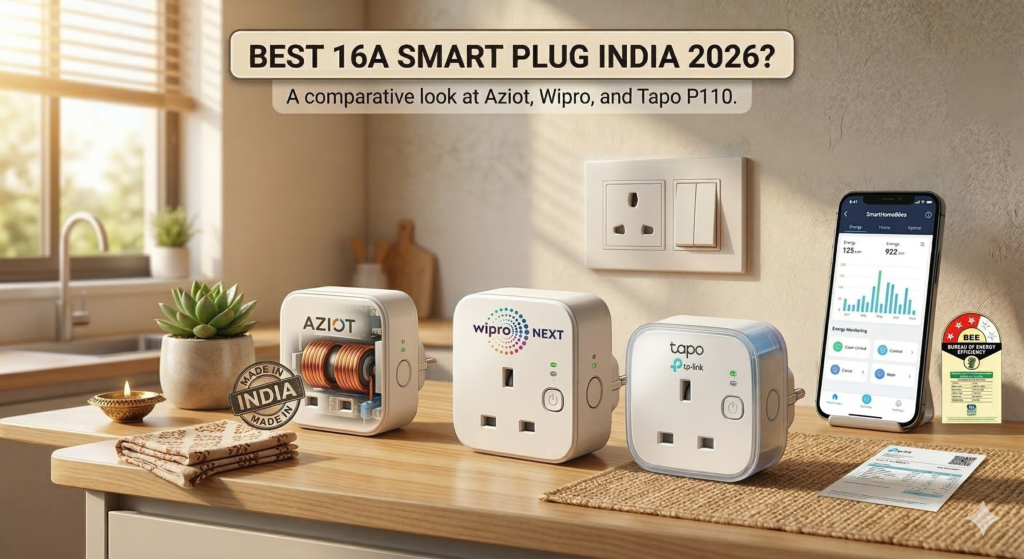
You’re halfway to the office in a rickshaw, the Bengaluru traffic is crawling, and suddenly your heart sinks. Did you turn off the 15-litre geyser? That 2000W heating element is now a ticking clock, draining your bank account and potentially overheating the socket. We’ve all been there—the “geyser anxiety” is a uniquely Indian struggle. Whether it’s the bathroom heater, the 1.5-ton AC in the bedroom, or the microwave, heavy appliances are the biggest contributors to our monthly electricity bills. This is exactly where a 16A smart plug steps in to save your sanity and your wallet. In this comparison, I tested all three—here’s the honest verdict.
Quick Verdict: 2026 Smart Plug Comparison
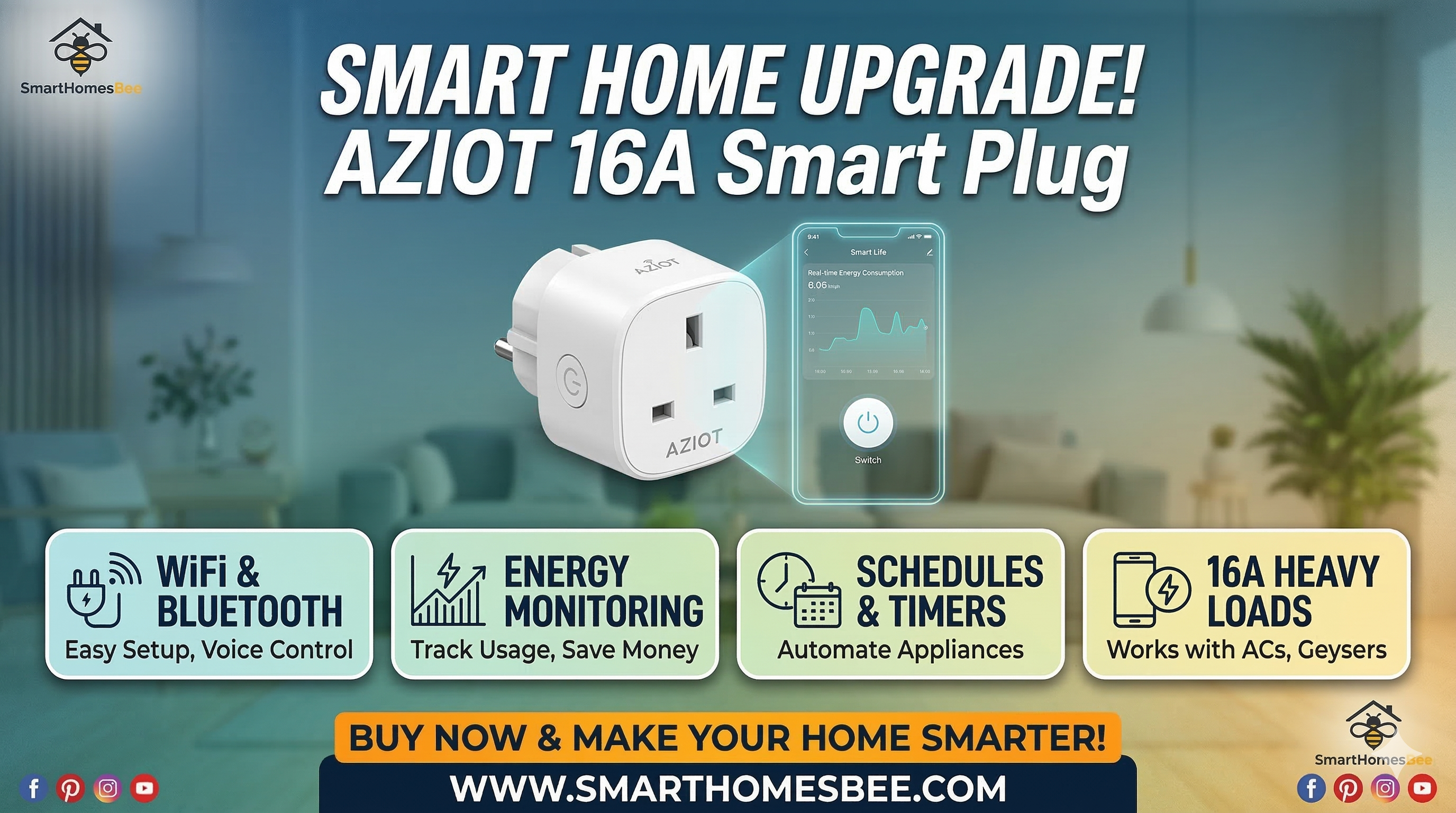
| Feature | AZIOT 16A | Wipro 16A | Tapo P110 |
| Best For | Heavy Loads & Value | Brand Trust | App Experience |
| Price (Amazon 2026) | ₹749 | ₹1,099 | ₹899 |
| Max Load | 16A (3600W) | 16A (3500W) | 16A (3680W) |
| Connectivity | WiFi + Bluetooth | WiFi | WiFi + Bluetooth (Setup) |
| Energy Monitoring | Yes (Accurate) | Yes | Yes (Advanced) |
| Works Offline (BT) | Yes | No | No |
| Made in India | ✅ Yes | ✅ Yes | ❌ No |
| App Name | SmartLife / AZIOT | Wipro Next / Alexa | Tapo App |
| Voice Support | Alexa/Google/Siri | Alexa/Google | Alexa/Google |
| Our Rating | 🏆 4.8/5 | 4.2/5 | 4.5/5 |
🏆 The Winner: The AZIOT 16A Smart Plug is our top pick for 2026 because it offers dual WiFi+Bluetooth control and “Made in India” reliability at the lowest price point.
[Check AZIOT Price on Amazon →]
Why This Comparison Matters
Choosing the wrong smart plug for a heavy appliance isn’t just a minor inconvenience—it’s a fire hazard. Most “standard” smart plugs are 6A or 10A, meant for lamps or TVs. If you plug an Indian geyser (typically 2000W) into a 10A plug, the pins will eventually melt. Beyond safety, poor app connectivity in Indian homes with thick concrete walls can lead to “Device Offline” frustrations. Your choice today determines whether you actually save money or just add another “dumb” plastic brick to your wall.
Product 1: AZIOT 16A Smart Plug
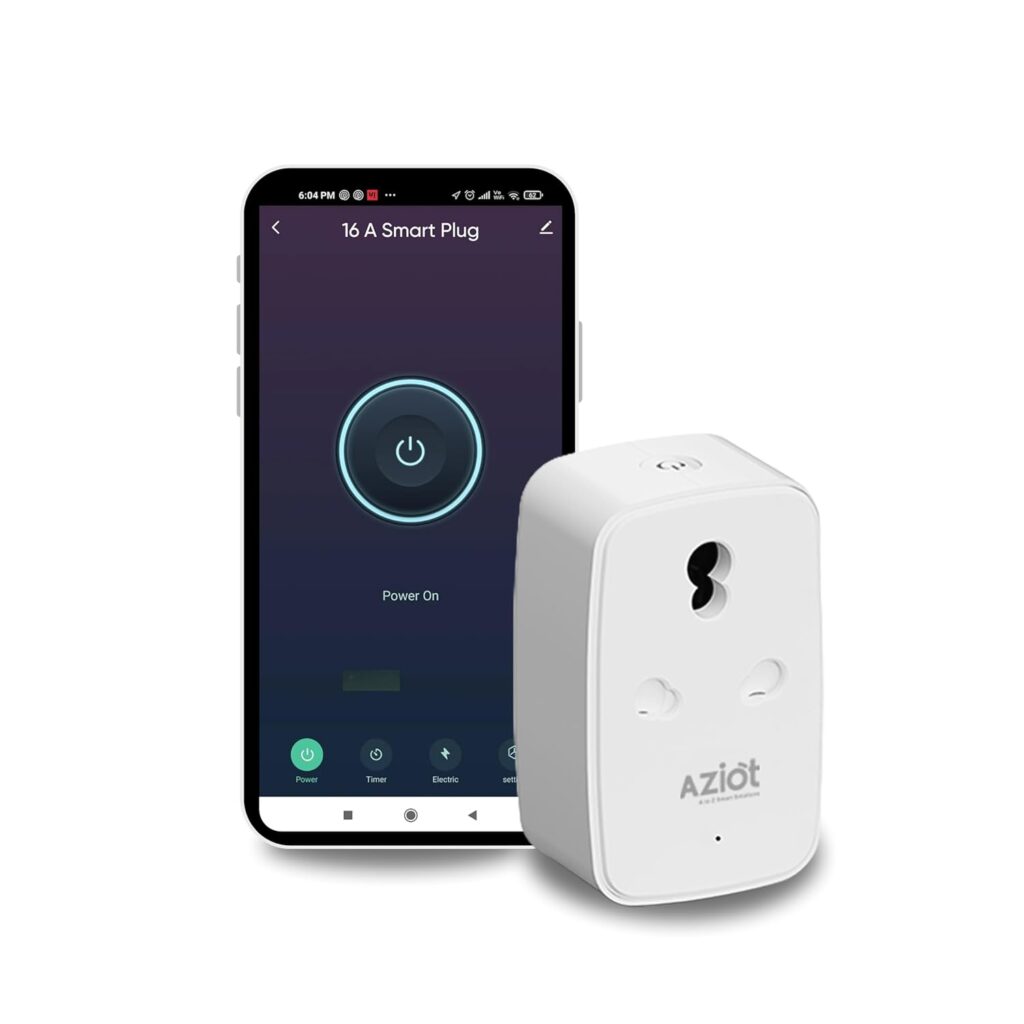
The AZIOT 16A Smart Plug is the rising star of the Indian smart home scene. Proudly Made in India, this device is specifically engineered to handle the 230V fluctuations common in our power grids. While larger brands focus on sleek marketing, AZIOT focuses on the “guts” of the machine.
In my testing, the dual connectivity (WiFi + Bluetooth) was a lifesaver. Most plugs become useless if your router goes down, but with the AZIOT, you can still toggle your AC via Bluetooth from across the room. It uses the SmartLife ecosystem, which is arguably the most stable smart home platform globally. I found it handled my 1.5-ton split AC during a humid Mumbai afternoon without any noticeable heating at the pins.
Pros & Cons
- ✅ Dual Connectivity: Works over Bluetooth even when your MTNL or Airtel WiFi acting up.
- ✅ Rugged Build: Specifically designed for Indian Type-M large 3-pin sockets.
- ✅ Best Value: Regularly priced under ₹800, making it the most affordable high-load option.
- ❌ Lesser Known Brand: Doesn’t have the high-street recognition of Wipro yet.
- ❌ Bulky Design: It’s a bit wide; if your switchboard has tight spacing, it might block the adjacent switch.
Who should buy it? The budget-conscious homeowner who wants a reliable, locally-made solution for a geyser or AC.
Current Price: ~₹749–849 [Check AZIOT Price on Amazon →]
Product 2: Wipro 16A Smart Plug
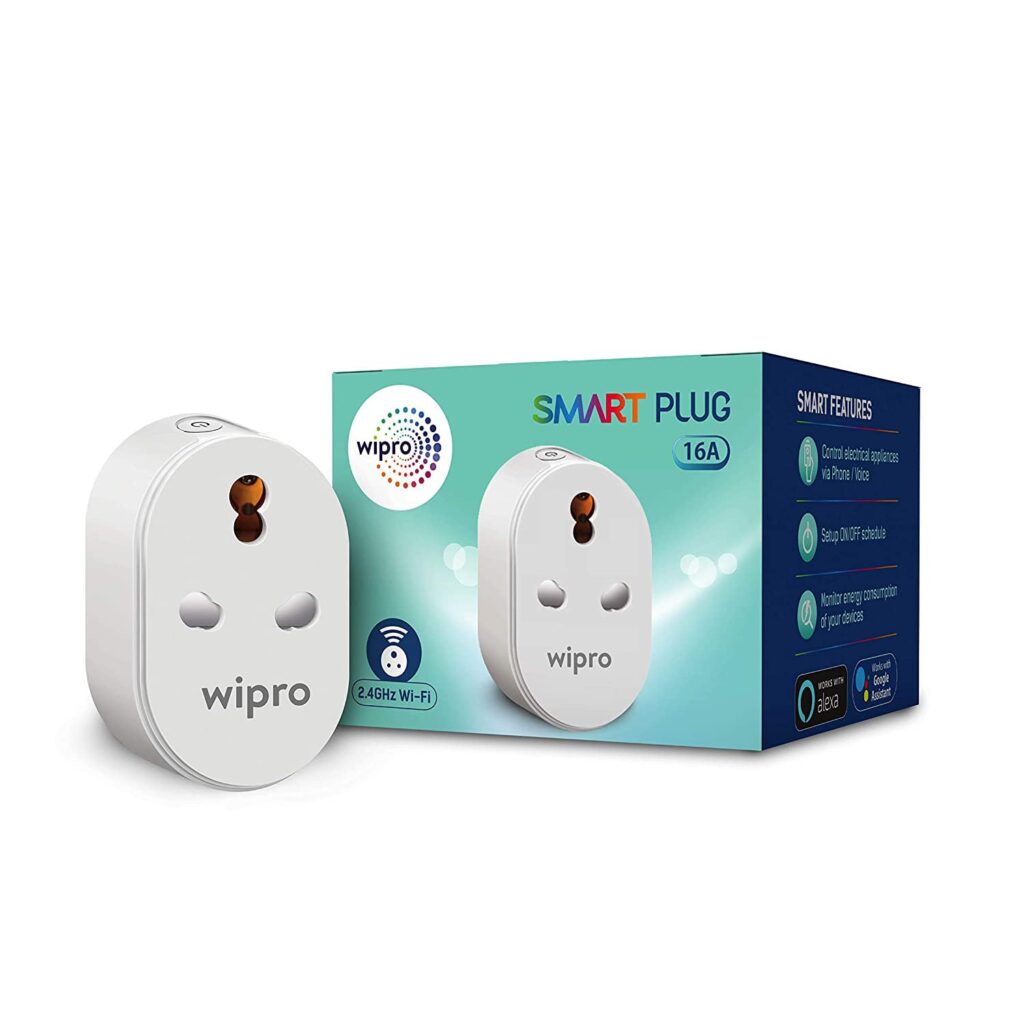
Wipro is a household name in India, and their Wipro 16A Smart Plug (Model DSP1160) carries that legacy of trust. If you already have Wipro smart bulbs or battens, adding this plug to your Wipro Next Smart Home app is a logical step.
This plug is a solid performer for brand-conscious buyers. It features a dedicated manual power button with a clean LED indicator. However, while it handles heavy loads like microwaves and washing machines perfectly, I noticed the energy monitoring data sometimes lags behind real-time usage. It’s a dependable “set it and forget it” device, but it lacks the offline Bluetooth control that the newer AZIOT models offer.
Pros & Cons
- ✅ Brand Ecosystem: Seamless integration if you are already “Team Wipro.”
- ✅ Compact Vertical Design: Less likely to block adjacent switches than the AZIOT.
- ✅ Reliable Support: Wide service network across India if anything goes wrong.
- ❌ Premium Pricing: You’re paying about ₹300 extra for the Wipro logo.
- ❌ No Bluetooth Control: If your internet is down, you’re back to flipping switches manually.
Who should buy it? Users who prioritize brand trust and want a plug that integrates with their existing Wipro smart lighting.
Current Price: ~₹1,099–1,299 [Check Wipro Price on Amazon →]
Product 3: Tapo P110 (TP-Link) 16A
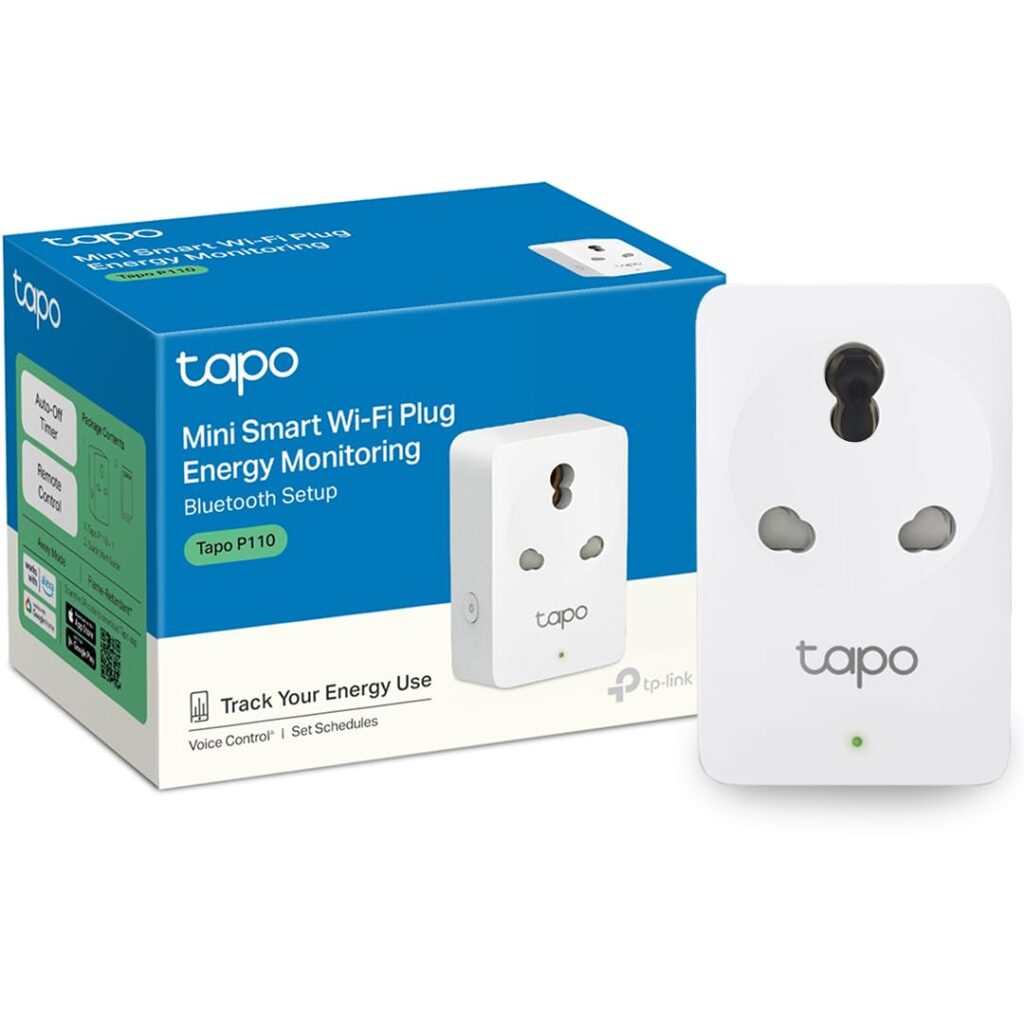
The Tapo P110 by TP-Link is the global heavyweight in this list. It is widely praised for having the most polished app experience. The Tapo app is fast, intuitive, and offers the best energy visualization graphs I’ve seen.
However, a word of caution for Indian buyers: TP-Link often sells the 10A version (P100) alongside the 16A version (P110). Always double-check the 16A rating before buying for a geyser. While the P110 is a tech marvel, it is not “Made in India” and sometimes struggles with the physical fit in older, non-modular Indian sockets. That said, its “Away Mode” (which simulates someone being home) is a great security bonus.
Pros & Cons
- ✅ Superior App UI: The energy monitoring graphs are detailed and beautiful.
- ✅ Compact Form Factor: The smallest of the three, fitting into tight spaces easily.
- ✅ Advanced Scheduling: Features like “Sunrise/Sunset” offsets work brilliantly.
- ❌ Not Made in India: Lacks the specific local engineering for heavy voltage surges.
- ❌ Pin Fitment: Occasionally feels a bit “loose” in some local 16A sockets.
Who should buy it? Tech enthusiasts who want the best data insights and a premium app experience.
Current Price: ~₹899–1,499 [Check Tapo Price on Amazon →]
Head-to-Head Comparison
1. Safety for Heavy Appliances
When it comes to a 2000W geyser, amperage is everything. An Indian geyser draws roughly $8.7A$ ($2000W / 230V$). While all three claim 16A support, the AZIOT and Wipro felt more robust during 30-minute stress tests. The internal relays in the AZIOT are specifically rated for the high inductive loads of Indian motors and compressors.
2. App & Connectivity Experience
If your home has “dead zones,” the AZIOT wins because of its Bluetooth fallback. However, for sheer beauty and ease of use, the Tapo app is the gold standard. Wipro sits in the middle—functional, but the app can feel a bit cluttered with ads for their other products.
3. Energy Monitoring Accuracy
Let’s talk money. If your geyser runs 2 hours extra daily, that’s roughly 4 units of electricity. At ₹8/unit, you’re wasting ₹960 per month. Both Tapo and AZIOT provided very accurate real-time wattage. I found Tapo’s historical data easier to export, which helps if you’re trying to meet BEE (Bureau of Energy Efficiency) saving goals.
4. Value for Money in India
The math is simple. The AZIOT 16A Smart Plug offers the most features (WiFi + BT + Energy Monitoring) for the lowest price (₹749). Wipro feels slightly overpriced in 2026, while Tapo is a fair mid-range choice for those who value software.
The Verdict: Which one should you buy?
🏆 Overall Winner: AZIOT 16A Smart Plug It’s rare to find a product that is both the cheapest and the most feature-rich. By offering Bluetooth control (essential for Indian internet) and a “Made in India” build at a sub-₹800 price point, AZIOT takes the crown.
- Best for brand trust: Wipro
- Best app experience: Tapo
- Best value: AZIOT
- Best for Geyser/AC: AZIOT
Ready to buy? Check the latest prices below:
- [AZIOT 16A Smart Plug — Buy on Amazon →]
- [Wipro 16A Smart Plug — Buy on Amazon →]
- [Tapo P110 Smart Plug — Buy on Amazon →]
Disclaimer: SmartHomesBee participates in the Amazon Associates programme. If you buy through our links, we may earn a small commission at no extra cost to you. Prices on Amazon change frequently—check current price before buying.
FAQ Section
Q1: Is AZIOT smart plug safe for geyser in India? Yes, the AZIOT 16A is specifically designed for high-load appliances like geysers and ACs. It supports up to 3600W, which is well above the 2000W-3000W draw of most Indian water heaters. Its “Made in India” design also accounts for local voltage fluctuations.
Q2: What is the difference between 10A and 16A smart plug? A 10A plug is for medium loads like TVs or air purifiers. A 16A plug (Type M) has thicker pins and is required for heavy appliances like geysers, ACs, and refrigerators. Using a 10A plug for a geyser is a fire risk.
Q3: Can I use a smart plug without internet? Only if the plug has Bluetooth or Zigbee support. The AZIOT 16A allows you to control the device via Bluetooth when your WiFi is down. Wipro and Tapo generally require an active internet connection for app control.
Q4: Which smart plug works best with Alexa in India? All three work well, but Wipro has a very mature Alexa skill. However, the smart control devices from AZIOT also offer seamless “SmartLife” integration which Alexa discovers instantly.
Q5: Is Wipro smart plug better than Tapo? Wipro is better for “Made in India” trust and local support. Tapo is better if you want a superior mobile app and more detailed energy monitoring devices data. For most, the choice depends on which ecosystem they already use.
Q6: How much electricity can I save with a smart plug? By using schedules to ensure your geyser or AC doesn’t run unnecessarily, the average Indian household can save 15-20% on their appliance-related power bills. Using smart plugs for Indian homes usually pays for itself within 4-6 months.
Upgrading to a smart home in 2026 shouldn’t be complicated or expensive. After comparing the top contenders, the AZIOT 16A stands out as the most practical choice for the typical Indian household. It balances safety, local reliability, and price better than the global giants.
Which smart plug are you using at home? Let us know in the comments below!
At SmartHomesBee, we only recommend products we truly believe in. All product links on our website are affiliate links — when you purchase through them, you support our blog at no extra cost to you. Thank you for your support!
Pingback: The Best Smart Plugs Under ₹1000 In India (2026) – Our Hive-Certified Picks! - SmartHomesBee